
Introduction
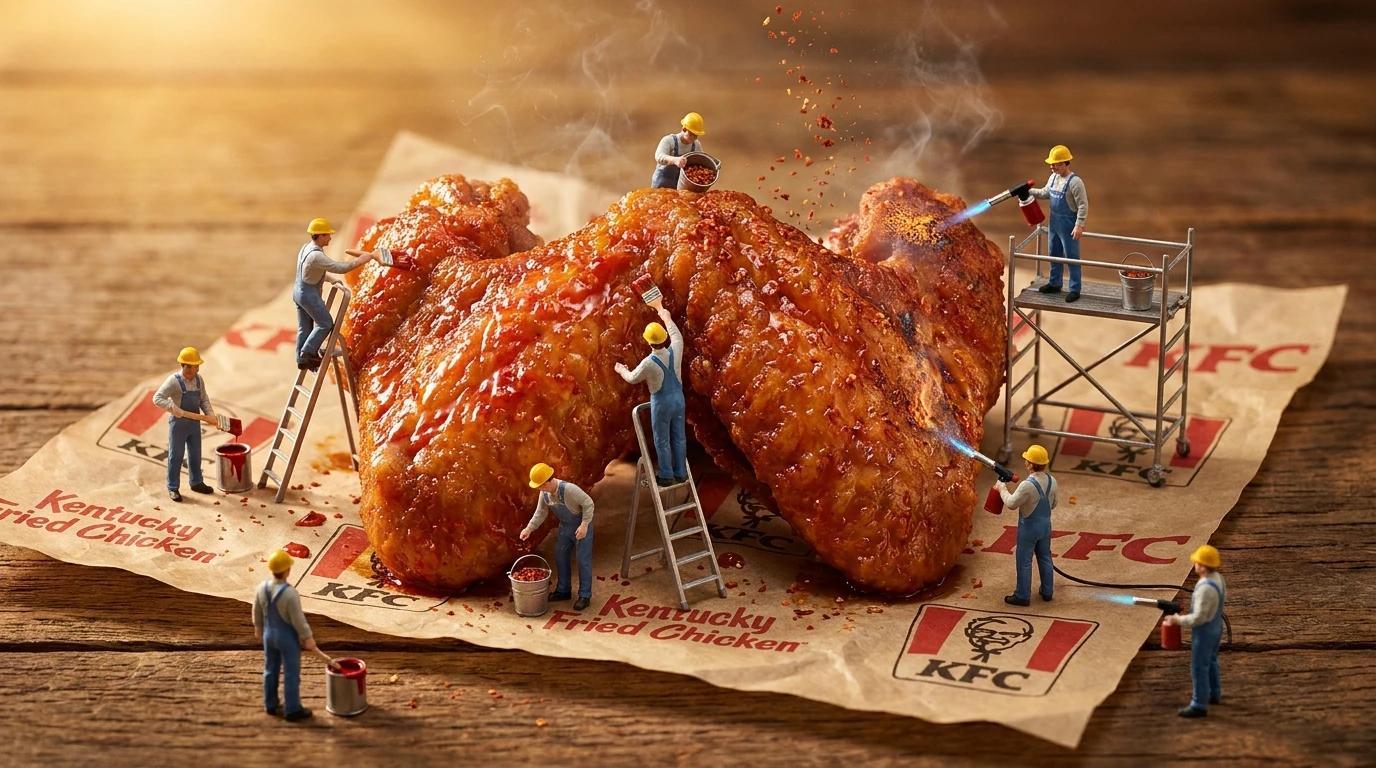
Generating standard AI food photography is relatively simple. But creating a surreal, playful, and hyper-realistic commercial advertising campaign requires a completely different approach. When you blend giant food items with miniature human figures, you are stepping into the world of surreal macro photography.
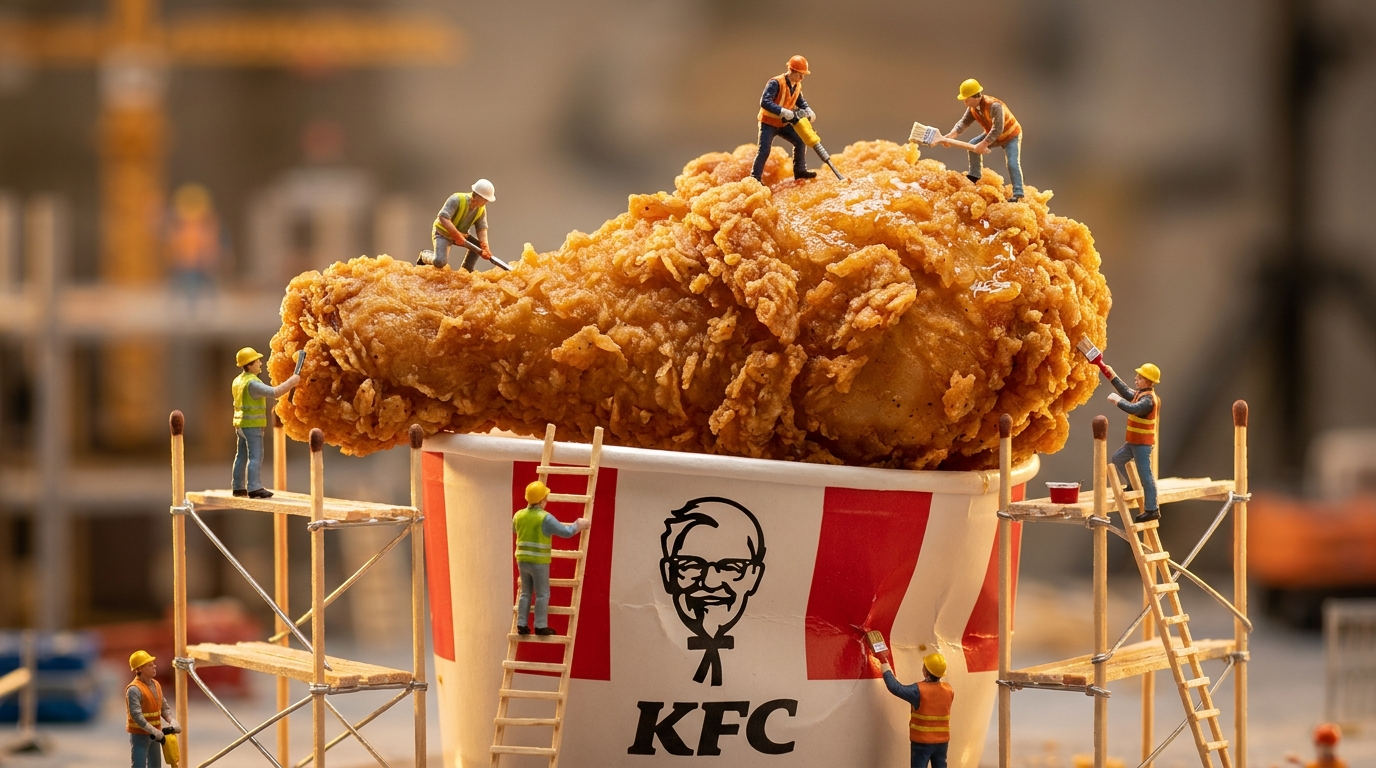
In this guide, we will analyze a creative advertising prompt series featuring miniature construction workers interacting with giant KFC food items. We will explore how to upgrade this prompt by applying real-world macro photography mechanics, studio lighting, and dynamic variables to build a cohesive, agency-level brand campaign.
Understanding the Commercial Objective
The goal of this prompt is not just to show a piece of chicken. The objective is to create a playful, imaginative brand campaign that stops people from scrolling on social media. It communicates that the food is a "monumental masterpiece" carefully crafted by tiny experts. This requires specific visual engineering to balance the appetizing look of the food with the playful storytelling of the miniature workers.
Original Base Prompt Analysis
What the Prompt Does Well
This prompt is incredibly creative. It successfully establishes a surreal narrative (miniature workers vs. giant food), defines the action (sculpting with tools and ladders), and sets the correct mood ("warm studio lighting, playful and imaginative tone").
Missing Elements That Limit Output Quality
However, it lacks technical camera instructions. Miniature photography relies entirely on a specific camera phenomenon: depth of field. Without specifying a macro lens and a shallow depth of field, the AI might render everything in sharp focus, which destroys the illusion of "miniature." Additionally, texture details (crispy skin, golden shine) need stronger emphasis.
Prompt Engineering Audit: The Scorecard
Original Prompt Evaluation Score
| Category | Score |
|---|---|
| Creative Concept | 9.5/10 |
| Storytelling | 9/10 |
| Lighting Setup | 8/10 |
| Camera & Lens Engineering | 3/10 |
| Texture & Photorealism | 6/10 |
| Overall Score | 7.1/10 |
Reasoning: The imaginative concept is top-tier. However, to make it look like a real, high-end commercial photograph, we must inject macro lens specifications and texture enhancements to elevate the realism.
Camera Engineering: Mastering Macro Photography
To trick the human eye into believing a scene is miniature, we must engineer the camera instructions like a professional toy photographer:
- 100mm Macro Lens: This lens is specifically designed to shoot tiny objects up close.
- Shallow Depth of Field (f/2.8): This blurs the background and the extreme foreground, leaving only the primary food item and the workers in sharp focus. This "tilt-shift" effect is mandatory for miniature art.
- Focus Stacking: Mentioning this technique ensures the AI keeps the crispy details of the food ultra-sharp.
Lighting & Visual Psychology
For food advertising, lighting is everything. Warm cinematic studio lighting enhances the golden-brown, crispy texture of the fried chicken. By adding "edge lighting," we can separate the tiny workers from the giant food, ensuring they don't get lost in the shadows.
The Final Evolution: The Complete Advertising Campaign Set
A true creative agency doesn't make just one image; they make a campaign. Here are the upgraded, highly technical prompts optimized for Midjourney v6, broken down into a 4-part series.
1. Sculpting the Drumstick
2. Monumental Chicken Bucket
3. Fries Construction Site
4. Polishing Spicy Wings
Final Prompt Engineering Lessons
Creating professional AI food art is about merging technical photography terms with imaginative storytelling. By adding instructions for macro lenses (100mm), specific camera effects (shallow depth of field/tilt-shift), and focusing heavily on texture (crispy skin, salt crystals), you elevate a basic prompt into a premium, agency-level commercial asset. Using a consistent structural formula allows you to easily swap the main subject (drumstick, fries, bucket) while maintaining a unified brand campaign style.
Frequently Asked Questions About AI Macro Photography Prompts
How do I create miniature photography prompts in Midjourney?
To create miniature photography effects, you must instruct the AI to use a "Macro Lens" (like a 100mm macro) and specify a "shallow depth of field" or "tilt-shift effect." This blurs the background and makes the small subjects look incredibly realistic.
What lighting is best for AI food photography?
Warm cinematic studio lighting is ideal for food photography. It enhances the golden, crispy textures of the food and makes it look appetizing while adding a premium commercial feel.
How do I build an AI advertising campaign prompt?
Instead of generating random images, create a core prompt template with dynamic variables (e.g., [crispy drumstick] or [french fries]). Keep the lighting, camera, and art style consistent across all generations to build a unified campaign.