How to Prompt Miniature & Macro Worlds: The Physics of the Pocket Watch Restoration Scene
Moving Beyond 2024: Prompting as a Creative Case Study
A common pitfall on the modern web is treating prompt design as a simple game of mad-libs—copying and pasting random lists of adjectives and expecting agency-level results. To build truly compelling, professional-grade imagery, we must look at prompt engineering through an analytical lens. We need to understand not only what we want the AI to generate, but how we want the virtual camera, lighting, and materials to behave.
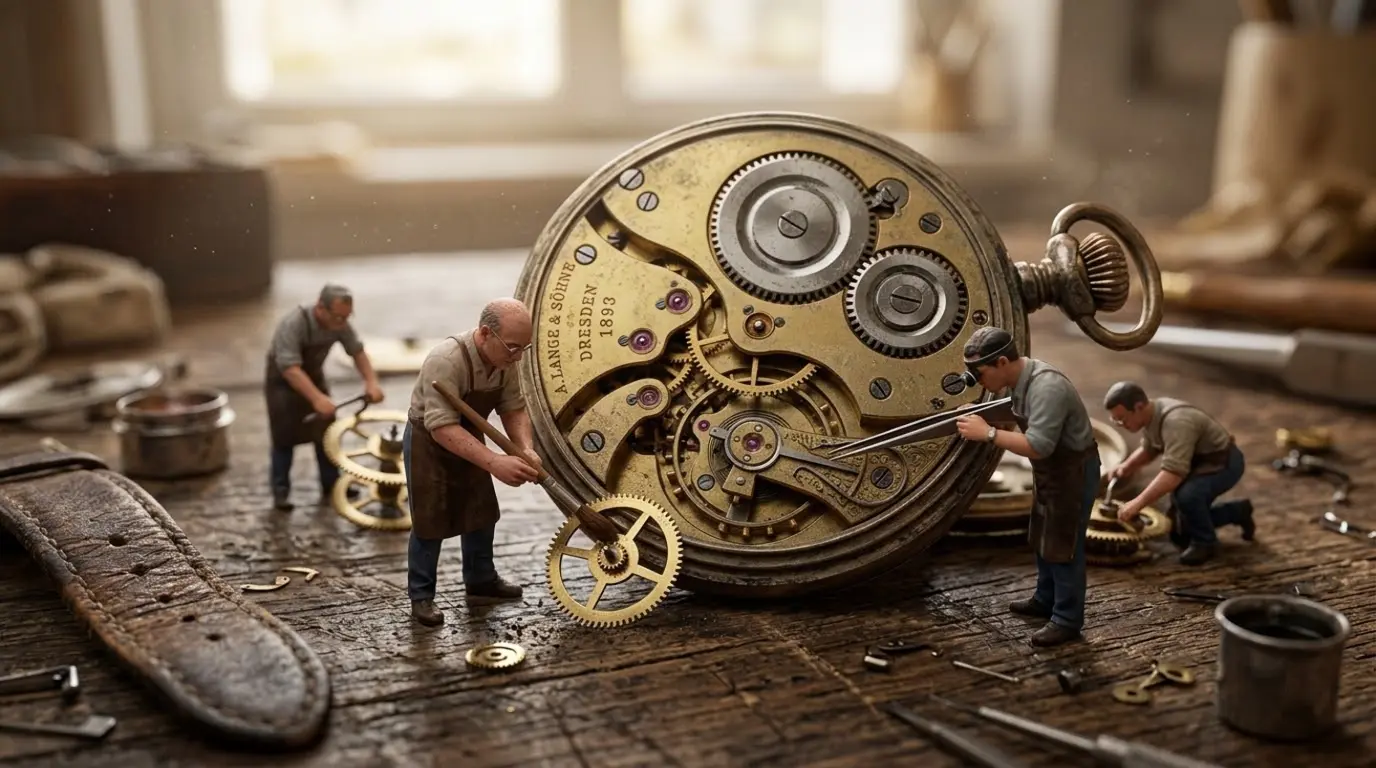
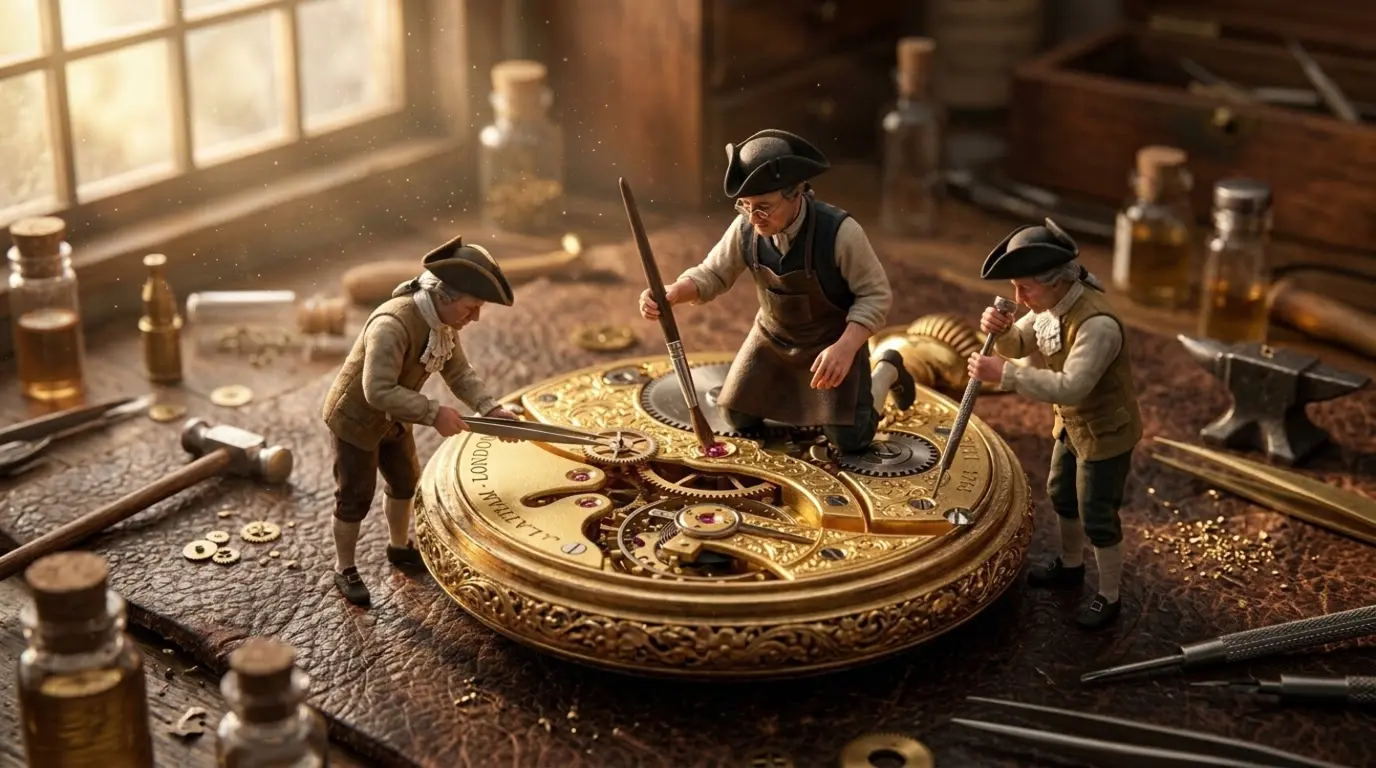
Miniature macro photography is a perfect playground for this level of prompt rigor. The visual charm of a tiny team of restoration workers polishing a giant antique pocket watch relies entirely on visual contrast and physical accuracy. If the textures look too clean, the light is flat, or the perspective is warped, the illusion of a miniature scale breaks down. Let's perform a technical deconstruction of this macro scene to understand how to prompt physical realism.
1. The Optical Illusion of Scale: Camera and Lens Selection
The most common mistake when attempting to generate a miniature scene is omitting camera lens coordinates. Without explicit parameters, generative models frequently default to wide-angle, flat perspectives that fail to establish scale.
To mimic the physical limitations of real macro photography, your prompt should instruct the model to simulate a specialized portrait or macro lens. In this case study, we use a Sony A7R V paired with an 85mm f/1.4 GM lens. The choice of an 85mm focal length combined with an extremely wide aperture of f/1.4 forces the AI's rendering engine to compress the background. By throwing the foreground and background details into a soft, creamy blur (bokeh), you pull the viewer's eye strictly to the thin slice of the scene where the tiny workers are laboring, immediately establishing the illusion of microscopic focus.
2. Lighting Physics: Sculpting Brass and Wood with Rembrandt Sidelight
Flat, direct lighting is an instant giveaway of synthetic rendering. Metallic objects like the pocket watch's gears are highly reflective; if lit from the front, they can easily look like solid, untextured yellow blocks.
To solve this, we engineer a classic studio setup: a Rembrandt window sidelight at 45 degrees. This specific directional instruction achieves several visual goals:
- It casts long, delicate geometric shadows across the teeth of the brass gears, revealing their true mechanical shape.
- It catches the edges of the tiny tools and the wood's natural grain, creating a stark contrast between light and shadow.
- It creates soft "specular highlights" on the polished surfaces, highlighting the reflective nature of glass and metal without washing out their details.
By directing the light from the side, you transform flat textures into tactile, physical materials.
3. The "Realism Glue": Micro-Imperfections
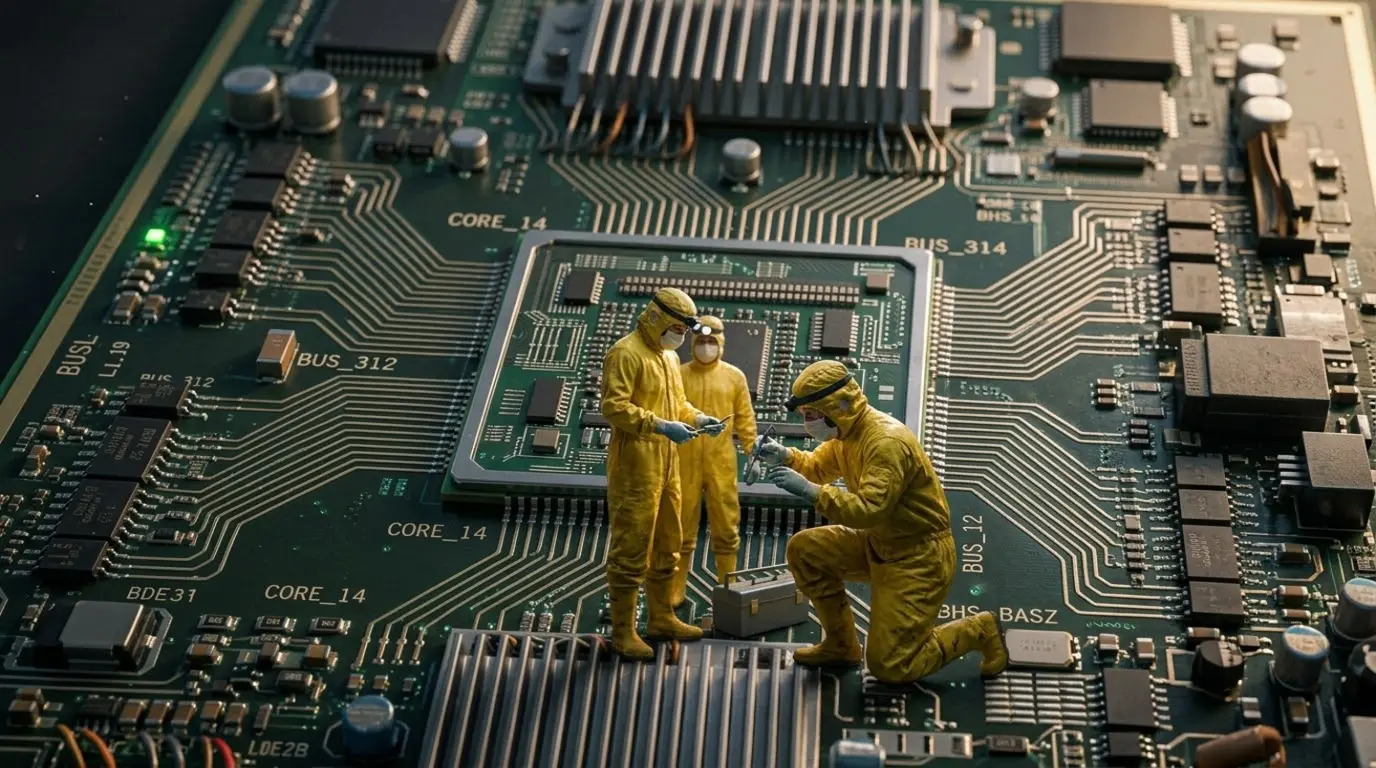
AI image generators naturally strive for geometric perfection. They default to flawless metal, pristine wood, and spotless glass. However, the human brain is highly sensitive to this lack of physical history; it immediately flags "too-perfect" objects as fake.
To break this sterile digital look, we must actively introduce physical noise. We do this by prompting for fine dust particles floating in the air, subtle tool scratches on the mechanism, and visible fingerprints on the watch casing. These organic, non-repeating micro-imperfections act as the "glue" that convinces the viewer's eye that the scene exists in a physical, dust-filled, lived-in world.
Testing Note: When generating this scene, keep in mind that different models interpret these details with varying degrees of success. Midjourney v6.1 (--style raw) excels at translating these micro-textures into a warm, organic photographic grain. Meanwhile, reasoning-focused models like Gemini 3 Pro are better at keeping the tiny characters properly positioned on the watch's delicate components without letting the gears distort.
Optimized Workflows: The Best Prompts for Your Projects
Depending on your creative goals, we have adapted this macro concept into two highly functional, distinct prompts. Both variations avoid vague buzzwords and focus strictly on real-world photographic logic.
1. The Pure Photographic Composition (Optimized for Midjourney v6.1 & Flux)
This prompt focuses heavily on material science, optical depth, and natural film textures. It is perfect when your main goal is an organic, gallery-ready photograph.
A detailed close-up macro photograph of miniature restoration workers meticulously repairing the gear mechanism of a brass pocket watch. Captured on an 85mm f/1.4 lens with an extremely shallow depth of field. Illuminated by a soft, warm window sidelight at a 45-degree angle, casting long shadows across a weathered, textured dark mahogany wooden surface. The pocket watch is positioned in the center, showcasing polished brass gears, fine dust particles floating in the light beams, and subtle metal wear. The tiny workers are wearing simple canvas aprons, holding fine brushes and miniature metal tools that show fine scratches. Deep, earthy color palette of copper, brass, and warm wood grain, photographic texture, cinematic quality --ar 16:9 --style raw --v 6.1
2. The Highly Structured Spatial Scene (Optimized for Gemini 3 Pro / OpenAI o3)
This version uses clear, sequential spatial boundaries to help the model's layout engine position the tiny characters without confusing their limbs with the watch parts—a common failure point in complex AI layouts.
A macro photograph of a miniature watch restoration scene. Composition Layers: - Foreground: A weathered wooden workbench showing distinct cracks, scratches, and fine grain textures in sharp focus. - Midground: A large antique brass pocket watch laid flat, exposing its complex internal gears. Several tiny, highly detailed human figures are positioned directly on the watch; one worker is cleaning a brass cog with a fine-tipped brush, while another is holding a miniature magnifying glass. - Background: A worn, textured brown leather watch strap falling into a soft, deep blur. Lighting: Warm, directional sidelight coming from the left, creating bright highlights on the polished brass and casting sharp, realistic shadows on the wooden surface. Cinematic atmosphere, warm bronze and amber color palette, highly physical and detailed.
Summary: Key Takeaways for Macro AI Art
Prompting a miniature scene exposes the limits of basic text descriptions. To create professional-grade visual assets, you must act as both the creative director and the camera technician. By defining clear, physical parameters—such as lens compression, directional sidelighting, and real-world micro-imperfections—you provide the AI's rendering engine with a logical blueprint, resulting in predictable, highly detailed, and commercially valuable digital art.